

Our cardiology services diagnose and treat heart-related conditions (also known as cardiovascular disease); heart attacks, coronary artery disease, heart arrhythmia, valvular heart disease and heart infections.
Heart disease affects one in 6 Australians according to the Heart Foundation of Australia.
Most heart conditions are treatable with intervention from cardiologists and other health professionals. By speaking to your general practitioner (GP) and seeking specialist advice you can help improve and maintain your heart health.
Cardiology services
We provide a comprehensive range of cardiology services including:
- diagnostic cardiac catheterisation
- coronary angiography
- percutaneous coronary interventions (stents and atherectomy)
- cardiac electrophysiological studies
- catheter ablation of arrhythmias
- cardiac implanted electronic devices (permanent pacemaker, implanted defibrillator, implanted loop recorder).
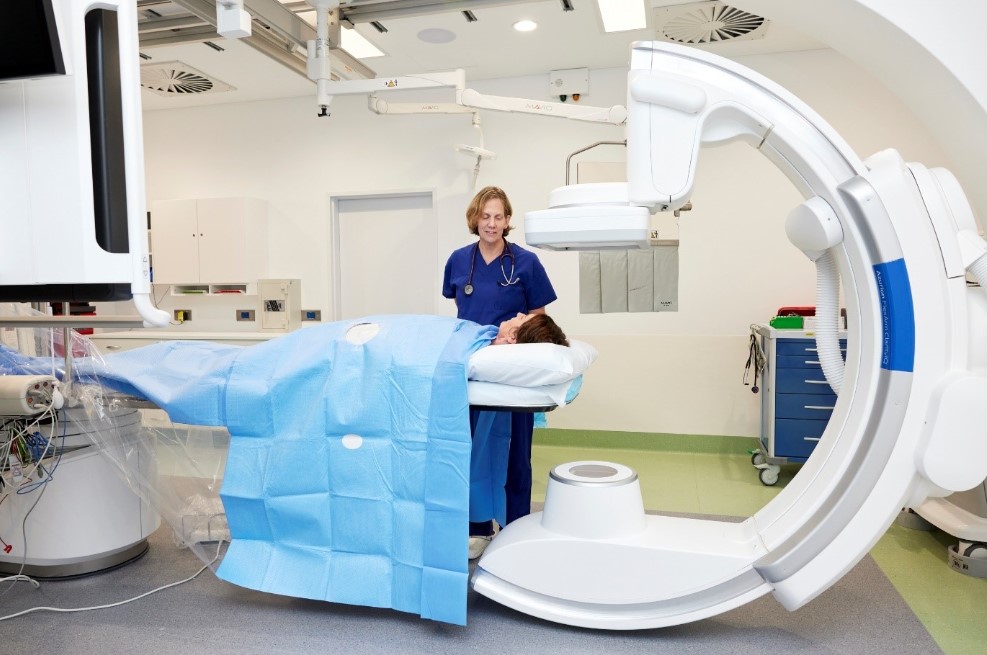
These services are supported by our highly trained nursing staff who work alongside our cardiologists in our cardiac care units, cardiac angiography suites, cardiac operating theatres, intensive care units, and cardiac rehabilitation facilities.
Our hospitals provide the latest cardiac equipment to ensure your cardiologist is able to provide you with the highest quality of cardiac care.
Our cardiologists and nurses work quickly to provide a diagnosis and treatment as soon as possible.
We provide clear information to you and your family about your cardiac condition and treatment. Our caregivers will support you and answer any questions you may have.
To effectively diagnose and treat your condition we may run different tests that will help with this. This could include blood samples, measuring your pulse, and imaging tests to diagnose your heart condition or see how you are recovering from your illness.
Coronary angiography
Coronary angiography is an x-ray study of your heart arteries (coronary arteries). It is a diagnostic test used to detect narrowing in the coronary arteries. This test can usually be performed as a day procedure, allowing you to return home the same day.
A coronary angiogram involves inserting a catheter (plastic tube) into an artery at your wrist or groin, through a needle puncture. This is performed under sedation and local anaesthetic, so there may be some slight discomfort, but the procedure should not be painful. The catheter is then guided to the coronary arteries.
A small amount of x-ray contrast (“dye”) is injected into the coronary arteries through the catheter, while an x-ray movie is recorded. This helps to identify blockages inside the coronary arteries.
Electrophysiological study (EPS) and catheter ablation
EPS and catheter ablation are procedures that diagnose and treat heart arrhythmia. It is frequently performed to treat atrial fibrillation (AF). EPS maps the electrical activity inside your heart and locates the electrical source of your arrhythmia. Once this site is located, the abnormal electrical pathway can be disrupted to stop further arrhythmia occurring.
An EPS is often performed under general anaesthetic and requires an overnight stay. Specialised electrode catheters are inserted through a needle puncture into the vein in your groin and passed into the right side of your heart. Often it is necessary to cross into the left side of your heart; this is called a “trans-septal puncture”. Once all electrode catheters are positioned, the catheters perform electrical stimulation with very low voltage electrical impulses. These impulses allow your cardiologist to identify the source of your arrhythmia.
When the site of arrhythmia is identified a high energy impulse is delivered by a more specialised catheter.
Electrocardiogram (ECG)
An ECG records your heart’s electrical impulses. It is used to help diagnose whether a patient is having a heart attack or had a previous heart attack. The ECG will also identify an abnormal heart rhythm.
Echocardiogram
This test uses ultrasound (high frequency sound waves) to create images of the heart. It checks if there are any problems with your heart’s valves and chambers and estimates how strongly your heart pumps blood.
Some common heart conditions we treat include:
- coronary artery disease
- acute heart attack
- heart failure
- heart rhythm disorders (e.g. atrial fibrillation, bradycardia, tachycardia)
- syncope (black outs).
Find a cardiologist
Benefits of our cardiology services
The benefits of accessing our cardiology services include:
- helping treat and overcome heart-related conditions
- potential for a better quality of life through improved physical and mental health and the ability to go about your day-to-day activities
- education to help you make decisions to reduce the risk of future heart problems that benefit your quality of life.
Heart conditions can sometimes be both sudden and serious. During your hospital stay, our caregivers provide intensive clinical support, while you and your family may also wish to seek pastoral care as you address the emotional effects of your condition.
Cardiac rehabilitation
Your cardiologist and treatment team may refer you to cardiac rehabilitation services to support you on your journey to recovery. This includes working with a multidisciplinary team of caregivers (specialist rehabilitation doctors, nurses, pharmacists, dietitians, and physiotherapists) to develop an individual care plan for your recovery.
Individual treatment plans might be supplemented with group classes led by allied health professionals who provide exercise therapy and dietary advice.
Where we provide cardiology services in Western Australia
Where we provide cardiology services in Victoria
Costs and payment information
St John of God Health Care private hospitals provide benefits that include reduced wait times for surgery, your choice of specialist, and access to high-quality, compassionate care.
We provide a range of ways to pay for your treatment.