

An endoscopy is a minimally invasive procedure that allows doctors to examine your internal organs without the need for major surgery. It's a vital tool in diagnosing a range of conditions, including digestive issues, bowel problems, polyps and certain types of cancer.
Our dedicated caregivers guide you through the entire process, offering clear explanations about what to expect during your hospital visit. They are available to answer any questions and provide support before, during and after your procedure.
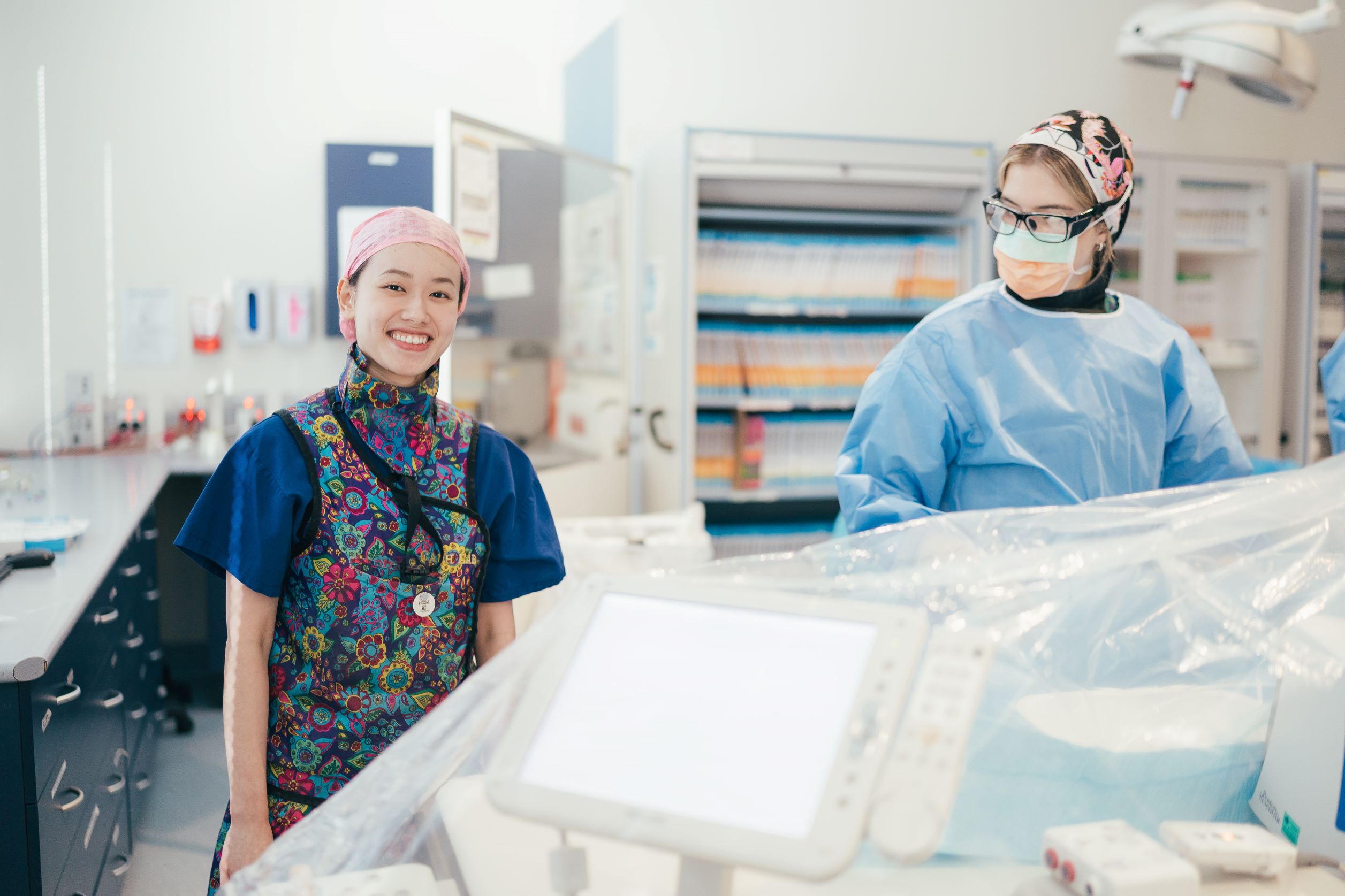
Our endoscopy services
We offer state-of-the-art endoscopy services. Our team of experienced gastroenterologists, surgeons, and registered nurses is committed to ensuring your experience is as stress-free as possible.
Endoscopies can be used to detect, diagnose or treat:
- gastrointestinal symptoms including reflux, heartburn, nausea or vomiting
- infections
- difficulty swallowing
- ulcers
- blockages
- polyps
- cancers
- gastrointestinal bleeding
- gastrointestinal conditions such as coeliac disease and inflammation such as Crohn’s disease and colitis.
Nearly all endoscopies can be provided as day surgery without the need for an overnight stay.
Types of endoscopy procedures
There are several types of endoscopy procedures, including:
- Gastroscopy: examines the oesophagus, stomach, duodenum, small intestine.
- Colonoscopy: examines the large intestine.
- Capsule endoscopy: examines the small intestine.
To perform an endoscopy, a doctor uses thin, flexible tubing with a microscopic camera on the end to see what’s happening inside your body. Depending on the procedure, this may be inserted through the mouth (gastroscopy) or anus (colonoscopy).
You will receive light sedation and in some cases a general anaesthetic may be required. You may experience some discomfort, but an endoscopy should not be painful.
Gastroscopy
An upper gastrointestinal endoscopy is a procedure that enables your doctor to look inside your oesophagus, stomach and small intestine.
It usually takes 10 to 20 minutes. A thin, flexible tube with a microscopic camera on the end (called a gastroscope) is gently inserted down your oesophagus. This will not affect your breathing.
Colonoscopy
A colonoscopy is a procedure that enables your doctor to look inside your rectum and colon (large intestine and large bowel). It usually takes 20 to 40 minutes. A tube with a microscopic camera on the end (called a colonoscope) is inserted via the anus.
Capsule endoscopy
Capsule endoscopy is a painless, non-invasive procedure that uses a vitamin-sized camera capsule to capture thousands of images of the small intestine. The capsule is swallowed and records images over 8 to 12 hours as it travels through the digestive tract, before passing naturally from the body. It helps detect conditions such as bleeding, tumours and Crohn’s disease.
Preparing for an endoscopy procedure
You will be asked to fast before a gastroscopy or colonoscopy, and you will be advised of the specific details to follow based on your procedure. You may also be asked to drink a liquid to clear your bowels so your doctor can get the best possible view of your digestive system.
You should let your caregivers know of any medications you are taking.
Your recovery
If you’ve had a sedative, you will need to spend a few hours recovering in hospital before you can go home. You will need a friend or family member to escort you home and stay with you overnight after the procedure.
Find your endoscopy specialist
Where we provide endoscopy procedures in Western Australia
Where we provide endoscopy procedures in Victoria
Costs and payment information
St John of God Health Care private hospitals provide benefits that include reduced wait times for surgery, your choice of specialist, and access to high-quality, compassionate care.
We provide a range of ways to pay for your treatment.