

Insomnia and other sleep disorders such as sleep apnoea can have a negative effect on your mood, your ability to function, your relationships, and your overall health.
Our sleep services
While many sleep issues can be managed by your general practitioner (GP), some conditions need specialist support.
Our team of sleep experts considers your overall wellbeing and answers any questions you may have to help you get a better night's sleep.
If you struggle to fall or stay asleep, snore, or feel very tired during the day, you may benefit from a sleep physician review and a sleep study.
Our sleep services include:
- sleep physician review
- full polysomnographic sleep studies, reviewing all the biophysiological changes that happen during sleep
- home-based sleep studies, primarily used to diagnose sleep apnoea
- continuous positive airway pressure (CPAP) management program
- insomnia management
- management of other sleep disorders such as restless legs syndrome.
Find a sleep specialist
What happens during a sleep study?
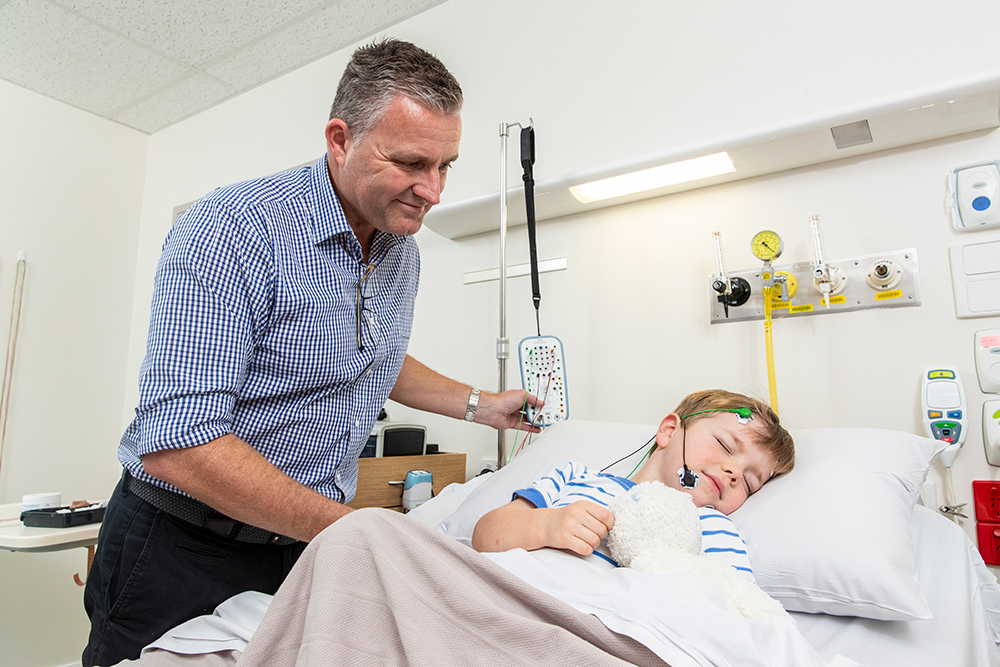
A sleep study can be performed either in the comfort of your own home or at one of our hospitals. These tests are painless and non-invasive.
At home
Sleep studies at home are generally used to diagnose obstructive sleep apnoea (OSA). We provide you with a portable sleep monitoring system and instructions to use the machine and sensors correctly. After completing the study overnight, you return the system the next day where your data will be downloaded and analysed.
In hospital
In hospital, we use specialised equipment and cameras that monitor your:
- breathing
- heart rate
- airflow
- snoring
- brain waves
- eye movements
- oxygen levels
- body position and muscle tone
- leg movements.
The data captured during these studies gives provides insight into the quality of your sleep based on:
- The different stages of sleep you entered through the night such as REM (Rapid Eye Movement) and non-REM stages.
- Sleeping and waking patterns.
- The number of times you woke up during the night.
- The severity of potential sleep disorder symptoms.
- The collection of this data allows your specialist to diagnose sleep disorders, form a treatment plan and determine next steps in managing your condition.
About sleep apnoea
Obstructive sleep apnoea (OSA) is a common sleep disorder often linked to snoring. It causes pauses in breathing during sleep and is associated with other medical conditions including diabetes, heart conditions, respiratory conditions, obesity and sleep conditions such as insomnia.
Continuous positive airway pressure (CPAP)
A continuous positive airway pressure (CPAP) machine is a device that helps treat sleep apnoea by delivering a steady, gentle stream of air through a mask that keeps your airway open while you sleep.
This reduces the number of times your breathing is interrupted or stops during the night and can result in:
- better quality sleep
- reduced snoring
- improved mood and alertness during the day
- improvements in blood pressure
- improved memory and cognitive function
There are several types of CPAP machines, each device differs slightly depending on your needs.
- Full mask: covers both your nose and mouth and is most beneficial if you usually breathe through your mouth when sleeping.
- Nasal mask: only covers your nose and is recommended if you move around a lot when you sleep.
- Nasal pillow mask: only covers your nostrils and not the rest of your nose.
Costs and payment information
St John of God Health Care private hospitals provide benefits that include reduced wait times for surgery, your choice of specialist, and access to high-quality, compassionate care.
We provide a range of ways to pay for your treatment.