

At St John of God Health Care, we put your physical and emotional needs at the centre of our approach to cancer care. Our experienced team will explain your diagnosis and treatment options and provide comprehensive care to help you feel supported along your journey.
What is cancer?
Cancer is a disease of the body's cells. Normally cells grow and multiply in a controlled way, however, sometimes cells continue to grow out of control and form a mass of abnormal cells called a tumour.
Cancer is the term used to describe collections of these cells, growing and sometimes spreading within the body. Cancer can refer to about 100 different diseases as it can grow from any types of tissue cell within the body.
Our cancer care and oncology services
Our holistic cancer care supports your physical, emotional and psychological wellbeing, including your surgical and medical needs. We provide education, clinical expertise and support for you and your loved ones in prevention, diagnosis and treatment of cancer.
We bring together clinicians from a wide range of disciplines associated with cancer treatment, including oncology, haematology and surgery. We pride ourselves on providing a high standard of professional, coordinated care with compassion and expertise.
Our cancer services include:
- cancer tests and procedures
- cancer-related surgery
- chemotherapy
- radiation therapy
- immunotherapies
- targeted therapies
- cancer research and clinical trials.
Tests you may need
Before, during and after your cancer treatment, it is likely you will undergo various tests to diagnose and monitor the progress of your cancer treatment and signs of recurrence.
These tests may include:
- blood tests – to test for cancer markers and infections in the blood.
- endoscopy/colonoscopy - to examine the gastrointestinal tract using a flexible tube with a small camera and light, allowing doctors to view changes within the digestive system.
- biopsies – extracting tissue samples to test for cancer cells.
- ultrasound – a scan used to identify tumours.
- CT scan – an x-ray scan that uses a dye to give a detailed image of the body.
- MRI scan – a scan to give a detailed image of the body.
- PET scan – a specialised imaging scan that uses a glucose material to show how the cells in your body are functioning, highlighting cancer cells.
Find an oncologist
Treatment options for cancer
Your specialist will discuss the options available to you and come up with a personalised treatment plan based on your individual diagnosis, preferences and overall health.
Chemotherapy
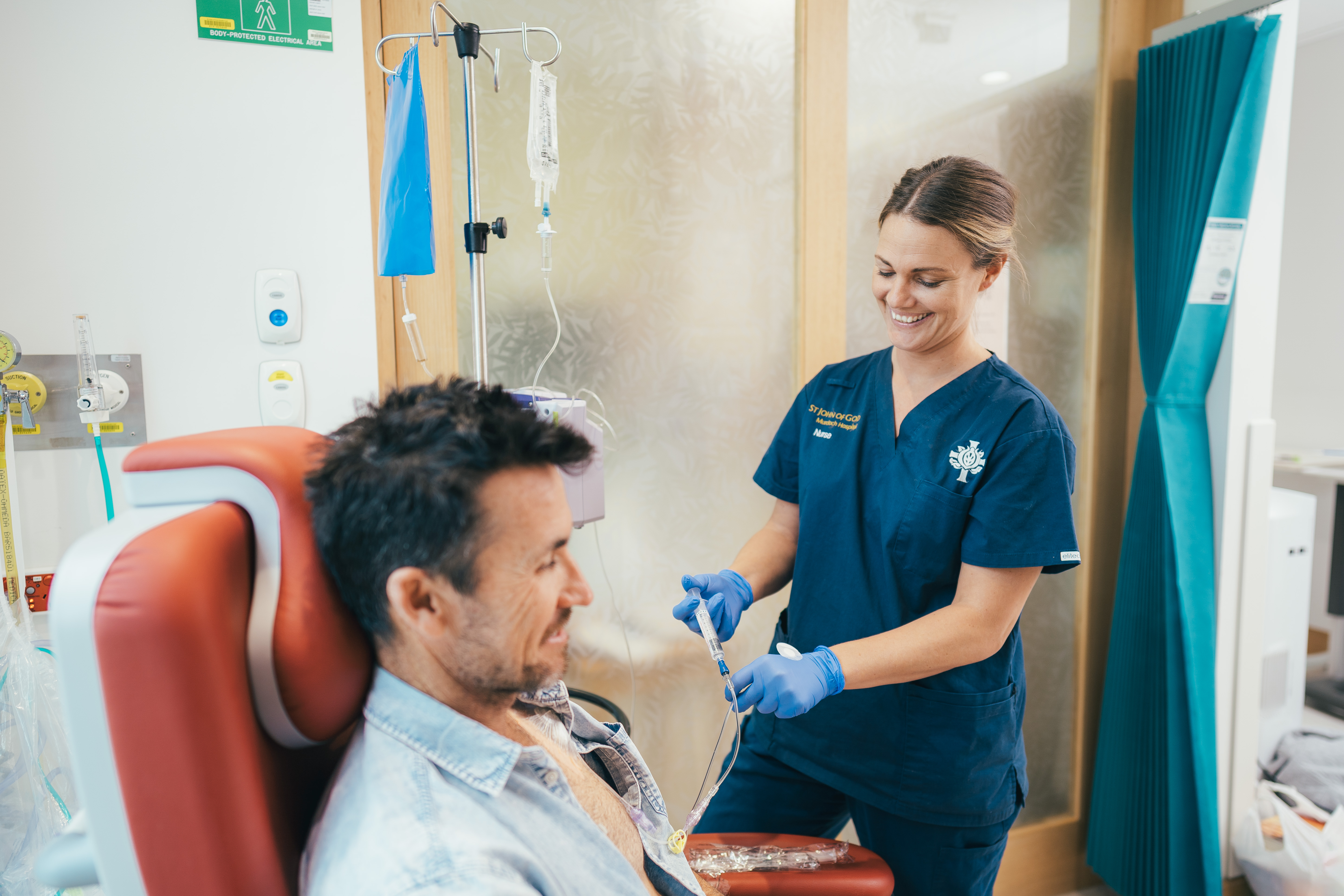
Chemotherapy is a drug therapy that destroys cancer cells. It can be taken orally by tablet or by a needle through the vein inserting the medication slowly using a drip.
Chemotherapy can be provided exclusively or in combination with other anti-cancer drugs or surgery. It is often used before or after surgery or with radiotherapy to shrink a tumour or prevent it from spreading further.
Our chemotherapy services are provided in a tranquil environment with comfortable seating, refreshments, reading materials and TVs to help you feel as comfortable as possible during your treatment.
A multidisciplinary team of clinical nurse consultants, pharmacists, social workers and other caregivers ensure you are well looked after in your time with us.
Radiation therapy
Depending on the cancer, radiation oncology may be used in combination with chemotherapy, or on its own. We offer specialist radiation therapy services using the latest techniques.
Learn more about radiation therapy.
Immunotherapy treatments
Immunotherapy is a type of cancer treatment designed to boost or modify the body’s immune system so it can better detect and attack cancer cells. This approach helps the immune system recognise cancer cells as harmful and target them specifically, while minimising damage to healthy cells.
There are several forms of immunotherapy used in cancer treatment, and the field continues to develop rapidly as new therapies and techniques are discovered. Immunotherapy can be used as a treatment on its own or in combination. For example, you may have surgery to remove a tumour and then undergo immunotherapy to prevent the cancer from returning.
Immunotherapy treatment is proving to be an effective treatment for patients with melanoma, lung cancer and oesophageal cancers. We are involved in several new studies using next generation immunotherapy combinations, some of which will be used in large numbers of patients for the first time in Australia and the rest of the world.
Types of immunotherapies include:
- T- cells and checkpoint inhibitors: T-cells circulate the body and destroy any abnormal cells and the checkpoints within the T-cells prevent the T-cells from attacking healthy cells.
- Immune stimulants: These treatments stimulate the immune system to attack cancer.
- Chimeric antigen receptor (CAR) T-cell therapy: CAR T-cell therapy boosts the ability of T-cells to fight the cancer. T-cells are removed from the blood and altered so they can better recognise cancer cells.
Targeted therapies
Targeted therapy, also known as molecular targeted therapy, is a drug treatment that works by attacking specific cancer cell features to stop the cancer cells from growing and spreading.
Targeted therapy as a cancer treatment has improved survival rates for several types of cancer, and many patients respond well to the treatment.
Targeted therapy drugs are used in Australia to treat several cancer types. These include blood cancers such a lymphoma and leukaemia and a range of other cancers.
Cancer research and clinical trials
By investing in research and clinical trials we can provide the most effective, evidence-based care to our patients. St John of God Health Care currently supports more than 50 cancer research projects, including clinical trials.
A number of our hospitals take part in cancer research and specific oncology clinical trials. Our commitment to research helps to ensure our patients can access some of the most advanced treatments.
Read more about research at St John of God Health Care.
Supporting cancer research
Our cancer research projects are supported through fundraising undertaken by the St John of God Foundation. If you would like to find out more about these projects, or how you can support cancer research visit the St John of God Foundation website.
Cancer rehabilitation services
We provide a range of support and rehabilitation services to cancer patients including:
- allied health support including social workers, dietitians, case managers, occupational therapists, physiotherapists and pharmacists
- pain and symptom management
- pastoral services
- specialist nurses in breast care, palliative care and oncology
- Healthcare at Home which is our home care service that is available to patients in Western Australia where our caregivers come to you to provide care in the comfort of your own home.
Where we provide cancer care in Western Australia
Where we provide cancer care in Victoria
Oncology blogs
Find out more about cancer in our health and wellbeing blogs.
Further reading
For more information about cancer in Australia visit the following websites:
Costs and payment information
St John of God Health Care private hospitals provide benefits that include reduced wait times for surgery, your choice of specialist, and access to high-quality, compassionate care.
We provide a range of ways to pay for your treatment.