

Around 2 in 5 Australians are expected to be diagnosed with cancer by the age 85. Radiation therapy is an important part of cancer care, and around one in 2 people with cancer may benefit from radiation therapy at some point during their illness.
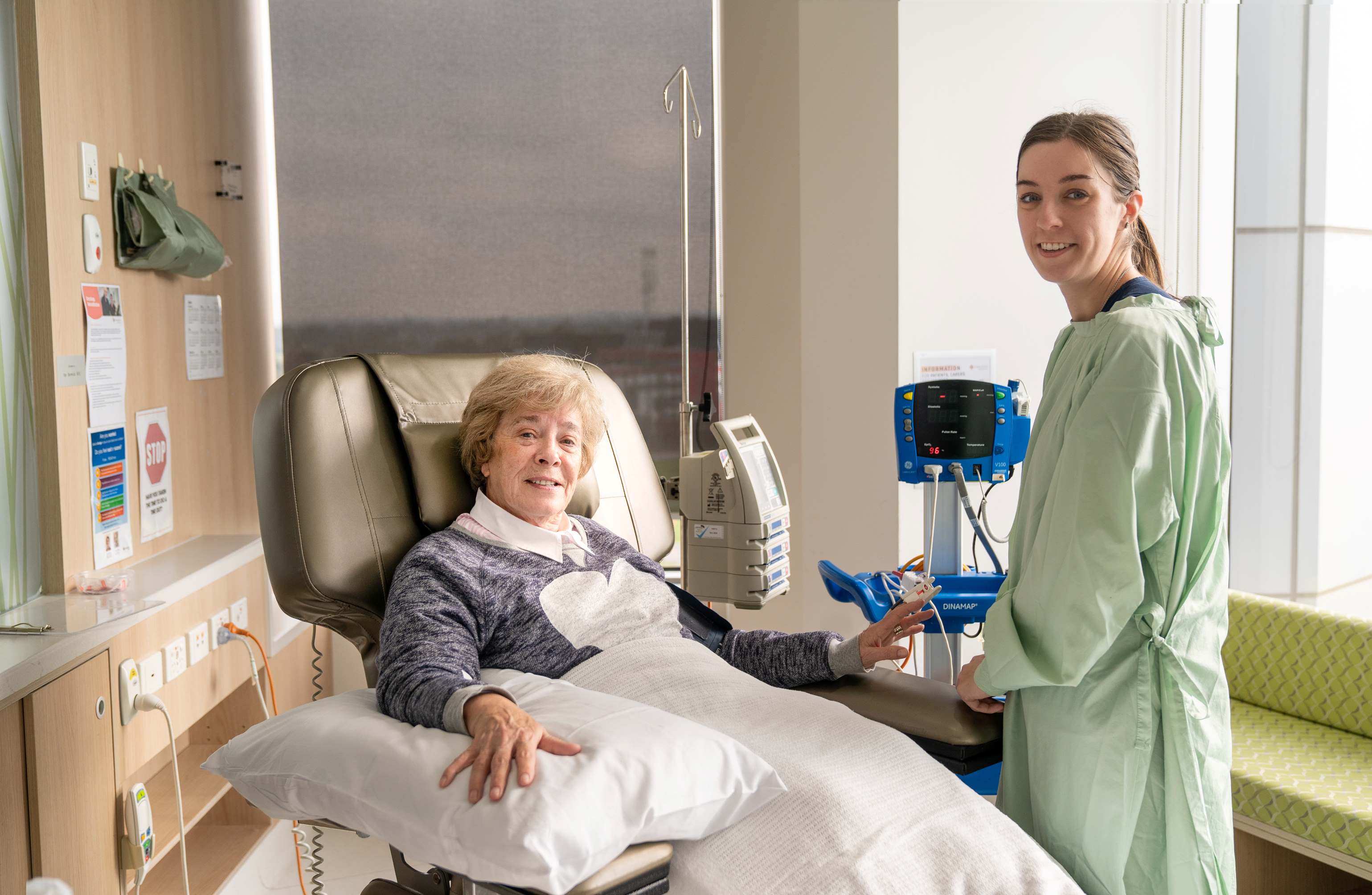
Radiation therapy uses carefully targeted radiation to kill cancer cells and can be used in the early stages of treatment or when cancer has spread. It can be used to cure cancer, reduce the risk of cancer returning after surgery, slow cancer growth, or relieve symptoms.
Depending on your condition, it can be given externally or internally.
The most common type of external radiotherapy is external beam radiotherapy. Internal radiotherapy is known as brachytherapy.
Our radiation oncology services
Radiation therapy may be provided on its own or in addition to surgery or chemotherapy. Your doctor will advise the best course of treatment for you.
Our caregivers are available to guide you through the process of receiving radiation therapy to help you feel at ease. We offer 2 types of radiation therapy.
External beam radiation therapy (EBRT)
External beam radiation therapy is the most common type of radiation therapy. It uses a treatment machine called a linear accelerator to deliver carefully targeted radiation beams to the cancer from outside the body. The aim is to treat the cancer while reducing the dose to nearby healthy tissues.
Some patients may be suitable for a more focused form of EBRT called stereotactic radiation therapy. This technique delivers highly precise radiation to a clearly defined area, often over fewer treatment sessions than standard radiation therapy. Your care provider will advise whether this approach is suitable for you.
Internal radiation (brachytherapy)
This type of radiation therapy uses a small radioactive material called a source that is implanted directly into the body inside the cancer or close to it to destroy the cancer cells.
Holistic cancer care from a multidisciplinary team
Our radiation oncology services are complemented by an extensive team to ensure you are as comfortable and well looked after as possible throughout your treatment. In addition to specialist radiation oncologists, our team includes:
- cancer surgeons
- medical oncologists
- pathologists
- clinical nurse consultants
- clinical pharmacists
- allied health care workers including dietitians, occupational therapists and physiotherapists
- palliative care
- pastoral care practitioners.
Preparing for radiotherapy
Before treatment, your radiation oncologist will explain the process, including planning and treatment, as well as potential side effects and answer any questions you may have.
Our caregivers support you through the process and provide follow-up care after your sessions are complete.
Depending on your treatment plan, you may only need one session of radiotherapy, or you may need multiple sessions over several weeks.
We encourage you to bring a friend or family member with you for your treatment sessions for support.
Benefits of our radiation oncology services
We deliver high-quality radiation oncology care by:
- Combining personalised care with state-of-the art technology.
- Developing an individual treatment plan based on your cancer type, overall health and treatment goals.
- Offering reduced waiting times wherever possible.
- Providing the expertise of highly specialised caregivers who will guide you through the full course of your treatment.
- Using modern radiation therapy techniques to target the cancer while reducing dose to nearby healthy tissues where possible.
Costs and payment information
St John of God Health Care private hospitals provide benefits that include reduced wait times for surgery, your choice of specialist, and access to high-quality, compassionate care.
We provide a range of ways to pay for your treatment.