

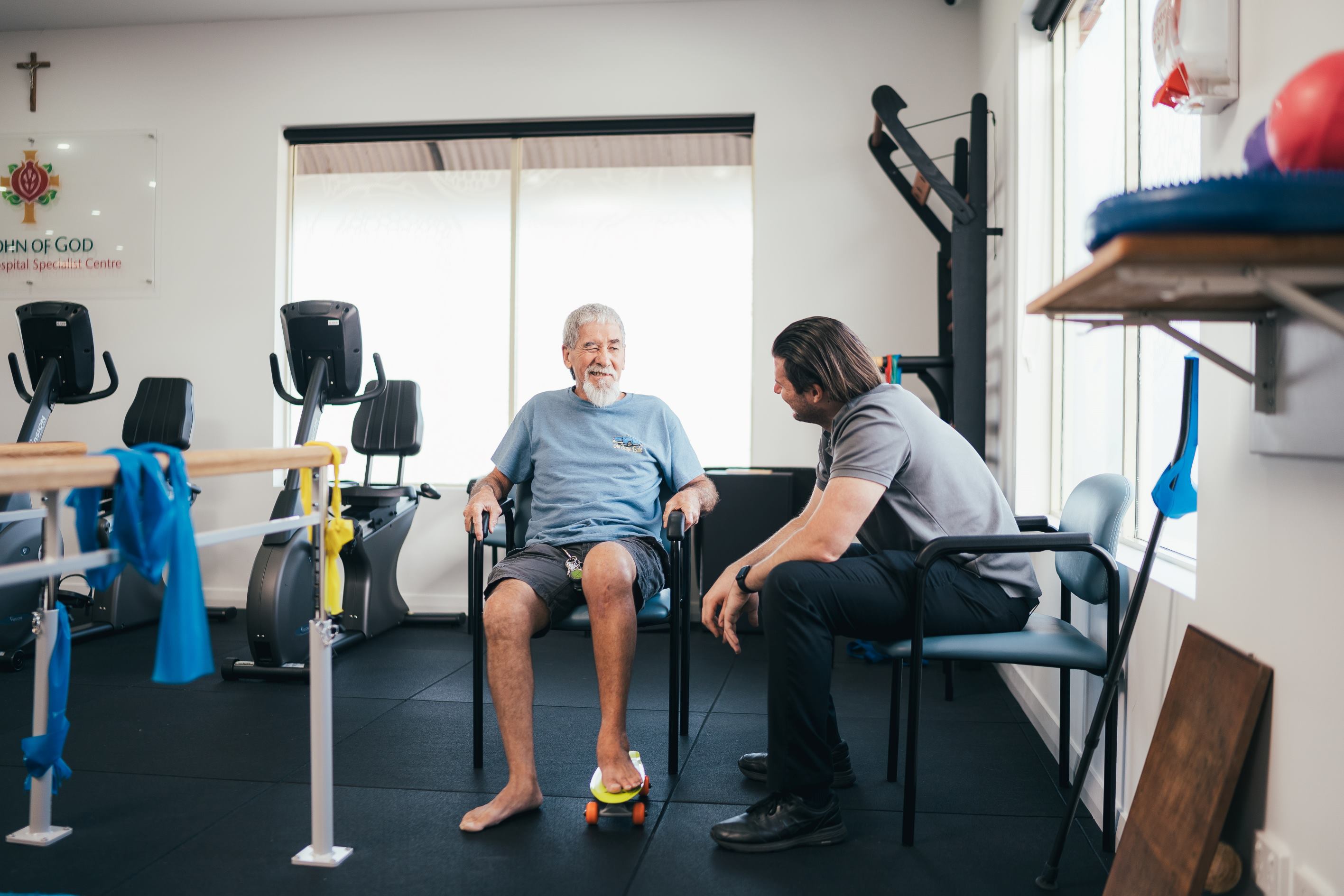
Our allied health services
Our allied health caregivers located across St John of God Health Care hospitals support your recovery from injury, illness or surgery. During your rehabilitation we partner with you to:
- set personalised recovery goals to help you regain your health, independence and quality of life as quickly as possible
- prevent and control disease
- improve your physical and mental health.
Physiotherapy
Physiotherapy treats disease, injury or disorders using physical methods such as exercise and joint manipulation. Physiotherapists are a key member of your health care team and play an important role in helping you regain movement and function so you can better manage day-to-day activities.
Your physiotherapist works with you to help you move more freely and reduce pain. This may include:
- individual and group exercise and education programs
- joint and soft tissue manipulation and mobilisation
- helping you use any walking aids correctly such as a walking stick, crutches or a wheelchair
- helping you use your muscles correctly to improve control
- hydrotherapy classes to ease any pressure on your joints and muscles.
We take a whole-of-person approach to your health care, which includes developing individual health care plans. This brings together a team of health professionals to help you recover and reach your goals.
Occupational therapy
Occupational therapy teaches you different ways to go about your daily activities like showering, dressing and personal hygiene. Our occupational therapist will discuss your recovery goals and what you need to do to achieve these.
They help by building your understanding of managing your own health and develop a plan on how you can do this, including home visits and assessments. This can include looking at self-care activities that are part of day-to-day life, managing household tasks and returning to those activities that are meaningful to you.
Exercise physiology
An exercise physiologist helps you recover and improve your health following illness, injury or surgery. The goal of exercise physiology is to give you the tools to improve and maintain your health through exercise.
This could involve developing personalised exercise plans, helping you adapt to new exercise programs, and making changes to your daily routines for better long-term health.
Hydrotherapy
Hydrotherapy involves exercising in a heated pool to help treat a condition or improve your recovery after injury, illness or surgery.
Exercising in water helps reduce the pressure and stress on your body and joints, and the warm water increases blood flow which can benefit those with chronic diseases.
Hydrotherapy may be offered to you as part of your rehabilitation care plan, to help you on your way to recovery. You may need medical approval from your doctor to access our hydrotherapy services.
Podiatry
Podiatrists are experts in foot care, treating a wide range foot complications resulting from such conditions as diabetes, peripheral vascular disease, neuropathy or arthritis.
Social work
Our social workers consider your existing support networks and help you access relevant community support services outside the hospital environment including counselling, aged care at home and new parent support. Our social workers also help you and your family to navigate the health care system and advocate on your behalf to ensure your wishes for medical treatment are known to your family and treating team.
Speech therapy
Speech therapy helps to strengthen your voice, improve the way you communicate, and assist you if you are having trouble chewing or swallowing when eating or drinking. If your ability to communicate has been impacted by illness or injury, speech therapy may help in your recovery.
Nutrition and dietetics
Our dietitians provide medical nutrition therapy to support your health, recovery and overall wellbeing.
Dietitians work with patients who may not be able to meet their nutrition needs through food alone, or who require specialised dietary management as part of their care.
Your dietitian will assess, diagnose and manage nutrition-related concerns, ensuring your nutrition plan is safe, effective and tailored to your individual needs.
Your dietitian may:
- assess your nutritional status and identify risks
- review your current diet and its impact on your health
- develop a personalised nutrition plan, including therapeutic diets
- provide oral nutrition support or specialised feeding if required
- help manage symptoms or treat side effects that affect eating
- provide education to support informed food choices
- assist with planning for discharge, including strategies for eating well at home.
Dietitian services are provided as part of your care plan, based on clinical need. If you have concerns about your nutrition while in hospital, you can speak with your doctor or nurse. They can assess your needs and arrange a referral to a dietitian if appropriate.