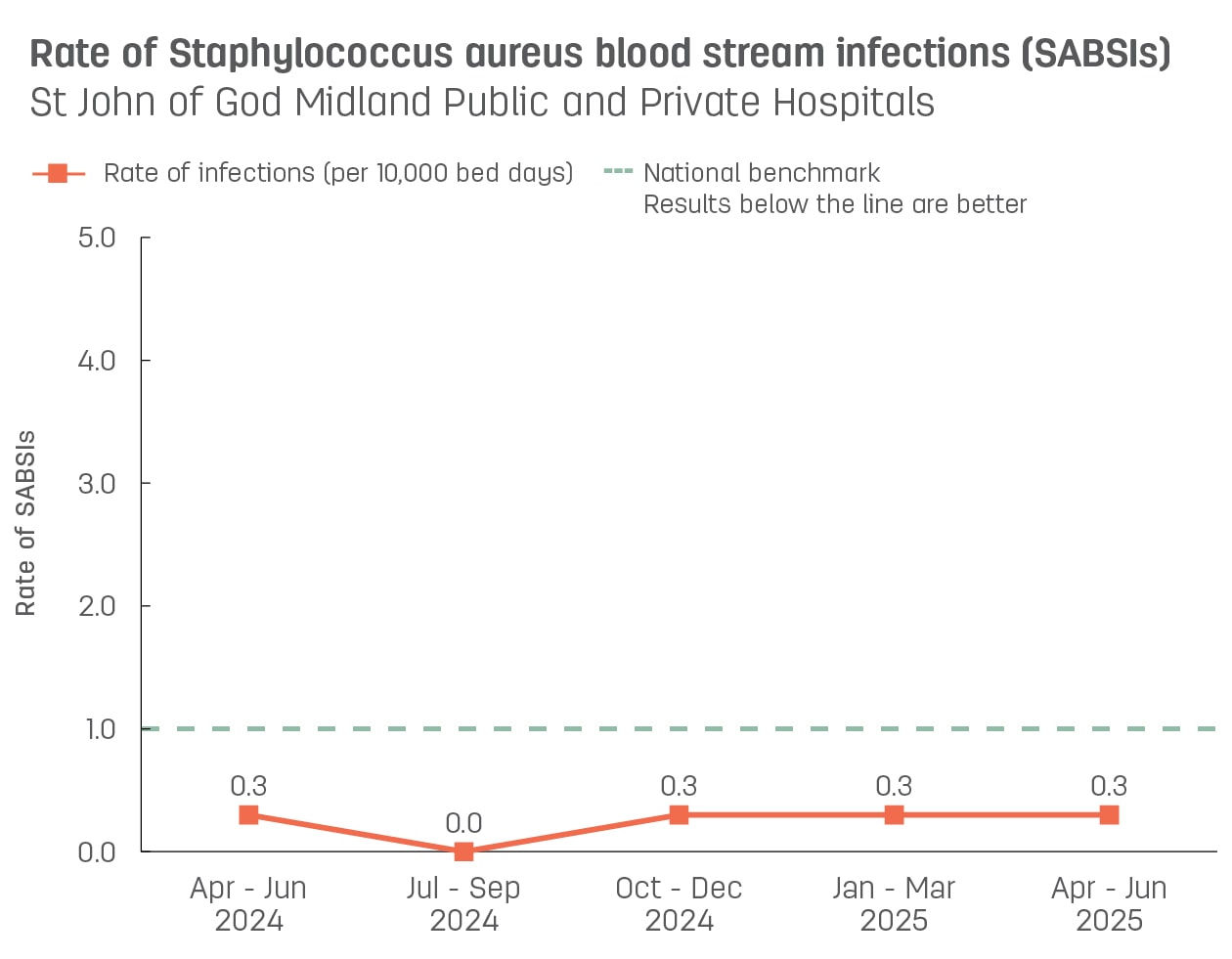

St John of God Health Care has a rigorous infection control program. We work to detect and prevent patient infections in our hospitals.
What you can do
- Regularly wash and sanitise your hands.
- Don’t be afraid to ask your care team or visitors to wash their hands.
- Ask people not to visit if they are sick.
- Cover your mouth and nose when coughing or sneezing, and wash your hands afterwards.
- Do not touch wounds or internal devices (such as intravenous cannulas, PICC lines or catheters).
- Tell your care team if you have any signs of redness or infection.
- If you are sent home with a device, ask your care team how to take care of it.
- Follow instructions when taking antibiotics – taking antibiotics incorrectly can make your infection harder to treat.
What St John of God Health Care does
- Our caregivers complete mandatory hand hygiene programs.
- We report and monitor infections.
- We use medications to prevent and treat infections.
- We have a robust caregiver vaccination program.
- We have strict hospital cleaning and sterilisation procedures.
About hand hygiene
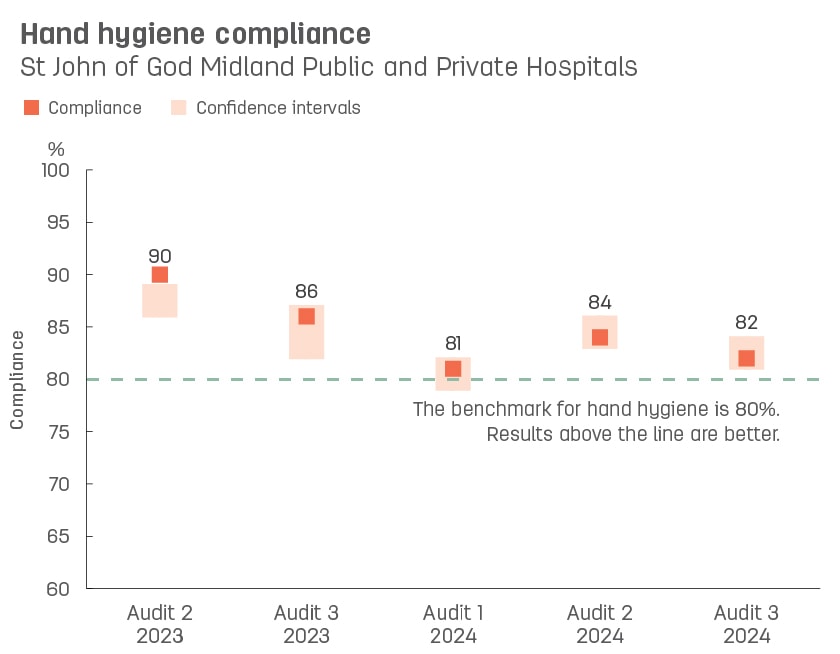
Hand hygiene is one of the easiest and most effective ways to prevent hospital infections.
St John of God Health Care hospitals regularly monitor and report on hand hygiene.
This is done through audits where trained observers watch for opportunities (called ‘moments’) when hand washing or cleaning should occur.
St John of God Health Care conducts two to three hand hygiene audits per year across all hospitals.
St John of God Midland Public Hospital's hand hygiene compliance
St John of God Midland Public Hospital's Staphylococcus aureus blood stream infections (SABSI) data