

If you or someone close to you is in distress or at risk of harm, call Triple Zero (000).
We offer specialised treatment for current and retired members of the emergency services and defence force suffering from post-traumatic stress disorder (PTSD) and psychological injury in Berwick, Melbourne.
PTSD in first responders
Police, paramedics, firefighters, State Emergency Services workers and Australian Defence Force (ADF) members are routinely exposed to high-stress conditions and traumatic events during their work.
This repeated exposure to trauma places them at higher risk of sustaining a psychological injury and developing post-traumatic stress disorder (PTSD).
As a result of this, your symptoms and experience of PTSD can differ significantly from that of the general population.
- First responders and ADF personnel often experience intense feelings of anger, guilt or shame while civilians often experience helplessness, horror or fear.
- While symptoms can develop after a single event, first responders and ADF members often experience cumulative PTSD through a gradual build-up of symptoms and distress.
- Many experience a process called sensitisation, where repeated exposure to traumatic events leads to increasingly severe reactions each time. Over time, events which would not have previously caused distress can begin to cause mental health problems.
- Experiencing emotional numbing, compassion fatigue or detachment. This can often lead to problems with interpersonal or professional relationships.
- Developing other mental health conditions such as anxiety, depression or drug and alcohol addiction.
Emergency services and defence trauma recovery
Our inpatient and day patient services are designed specifically for current and retired members of the ADF and emergency services.
A range of evidence based treatments are available to clients in a private unit for first responders and ADF personnel, delivered by a team of experienced clinicians who have received training in emergency services and defence culture.
Individualised treatment options include but are not limited to:
- alcohol and other drug detoxification and treatment
- medication
- transcranial magnetic stimulation (rTMS)
- electroconvulsive therapy (ECT)
- group therapy
- EMDR.
Your treatment may include individual and group counselling, medication or a combination of these.
About the trauma unit
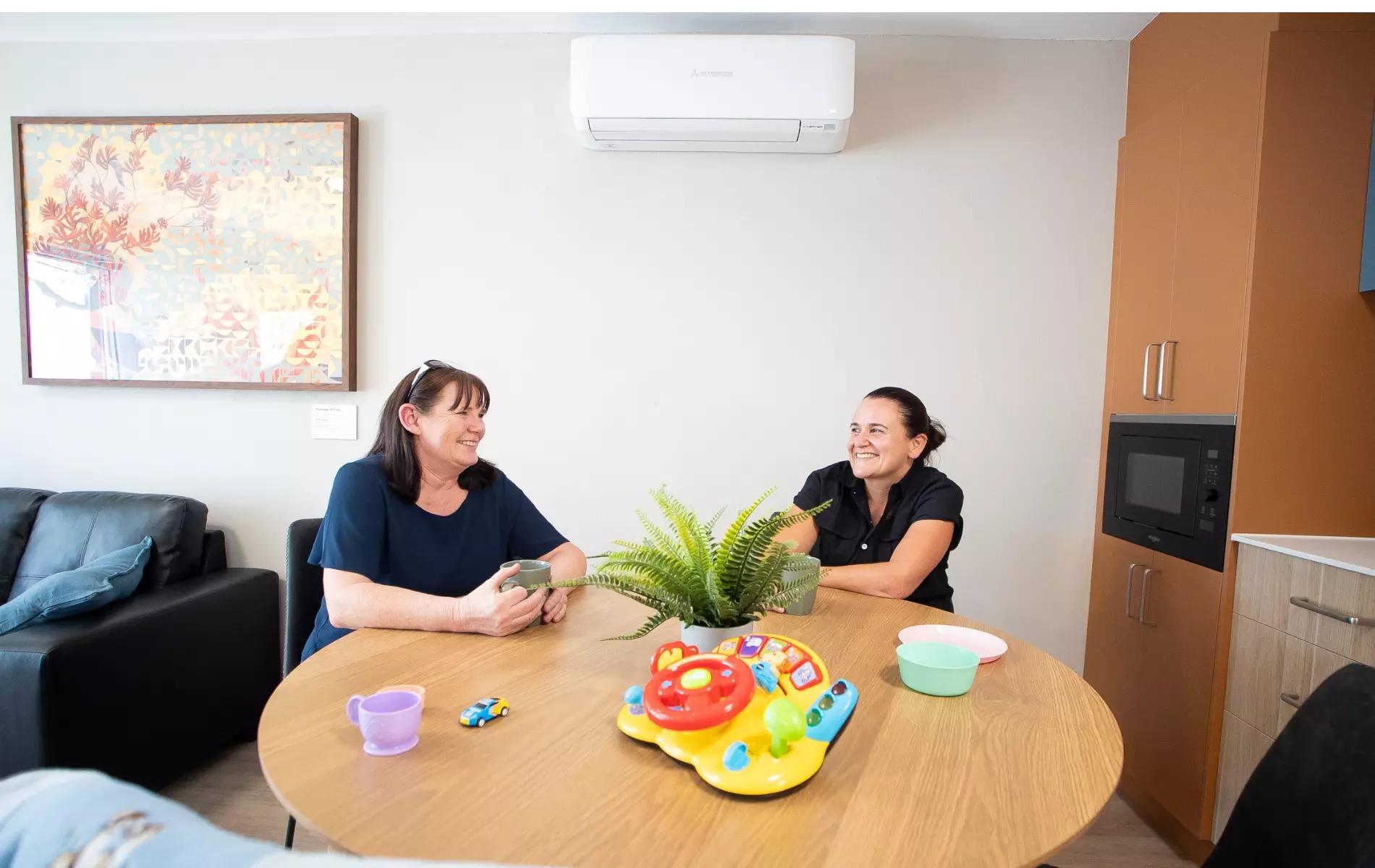
St John of God Langmore Centre’s dedicated trauma unit for first responders and ADF members is a welcoming space with a homely feel.
While you are free to come and go from the unit and move around the building, the unit is secure, meaning that patients from other areas of the hospital are unable to enter. This added level of security and privacy can be very important to ADF personnel and emergency services workers.
You will have your own private room, desk, ensuite bathroom, storage space and TV. With large windows and lots of natural light, your room is a safe haven for you to rest and relax.
Within the trauma unit, you will have access to the lounge area and a kitchenette with tea and coffee facilities. Our chef-designed menu gives you a range of delicious meals to choose from.
Exercise is an important part of managing a psychological injury, and you are encouraged to use our gym, with support available from a qualified exercise physiologist. Our walking groups provide an opportunity to enjoy some fresh air and the endorphins that exercise brings.
If you enjoy being outdoors, the sensory garden offers a space to get your hands dirty and enjoy tending to the vegetable and herb gardens. The outdoor spaces and deck are available for you to relax and get some vitamin D.
Your loved ones are welcome to visit and can play an important role in your recovery and treatment. Supporting someone living with PTSD can be challenging for support people and they are welcome to join our carers group.
Accessing treatment
WorkCover: We are registered to provide care for patients covered by WorkCover, we can also support you to access provisional acceptance.
Department of Veterans' Affairs (DVA): We partner with the DVA to provide mental health care for veterans and current ADF members.
Private health insurance: Gold cover is required for admission, however, you are now able to upgrade your cover to access more benefits for inpatient treatment without serving a waiting period.
Get in touch
For more information on accessing these services, please contact us on the dedicated email: [email protected] or call us directly on 03 9773 7060.
Langmore psychiatrists
Our psychiatrists provide compassionate specialist mental health support for a range of conditions including PTSD.
Search Langmore psychiatrists
Why seek treatment?
Pia, a former police officer, describes what post-traumatic stress looked like for her, and the impacts on her life and family.
Watch this video on 'Why seek treatment?'
Symptoms you can experience
Alana, a former police officer, describes her experience of post-traumatic stress, including symptoms and feelings of shame and guilt. Professor Zac Steel explains the science behind the threat response.
Watch this video on 'What symptoms can you experience?'
What is trauma?
Professor Zac Steel explains what trauma is in relation to post-traumatic stress, and how it can be triggered by physical and moral threat.
Watch this video on 'What is trauma?'
Enquiry form
If you would like more information about our specialised PTSD services for current and retired first responders and ADF members, please fill in the form below.